Twenty-two states and Puerto Rico now issue a digital driver's license. The state is only half the answer. Which phone you own, and which wallets your state has approved, decide whether you can carry it today.
In six jurisdictions the license is available only in a state-issued app. In two states it is available only in Apple Wallet. The table below covers every digital driver's license state and territory: each jurisdiction that issues a mobile driver's license built to the ISO/IEC 18013-5 standard, and the wallets and apps it supports.
At a glance
- As of November 18, 2026, 22 states and Puerto Rico issue a mobile driver's license built to the ISO/IEC 18013-5 standard.
- Apple Wallet carries 17 of the 23 credentials, Google Wallet 13 and Samsung Wallet 9.
- Fourteen jurisdictions offer a state-issued app. In six (Alaska, Connecticut, Kentucky, Louisiana, New York and Utah) the app is the only option.
- North Carolina is next, with NC Wallet first and Apple, Google and Samsung support expected in 2027.
- Most issuing states still ask residents to carry the physical card.
Which states have a digital driver's license in 2026
The states with digital ID today, listed alphabetically. A jurisdiction is counted when its mobile driver's license (mDL) or state ID follows ISO/IEC 18013-5, the standard that checkpoint and retail readers use.
| State or territory | Apple Wallet | Google Wallet | Samsung Wallet | State-issued app |
|---|---|---|---|---|
| Alaska | No | No | No | Alaska Mobile ID |
| Arizona | Yes | Yes | Yes | Arizona Wallet |
| Arkansas | Yes | Yes | Yes | Arkansas Mobile ID |
| California | Yes | Yes | Yes | CA DMV Wallet |
| Colorado | Yes | Yes | Yes | myColorado |
| Connecticut | No | No | No | Connecticut Mobile ID |
| Georgia | Yes | Yes | Yes | No |
| Hawaii | Yes | No | No | No |
| Illinois | Yes | No | No | No |
| Iowa | Yes | Yes | Yes | Iowa Mobile ID |
| Kentucky | No | No | No | KY Mobile ID |
| Louisiana | No | No | No | LA Wallet |
| Maryland | Yes | Yes | Yes | No |
| Montana | Yes | Yes | No | No |
| New Mexico | Yes | Yes | No | No |
| New York | No | No | No | NY MiD |
| North Dakota | Yes | Yes | Yes | No |
| Ohio | Yes | Yes | No | No |
| Oklahoma | Yes | Yes | No | No |
| Puerto Rico | Yes | Yes | No | PR Móvil |
| Utah | No | No | No | GET Mobile App |
| Virginia | Yes | No | No | VA MiD |
| West Virginia | Yes | No | Yes | WV MiD |
Issuing jurisdictions from AAMVA's mDL implementation map and TSA's participating-states page. Wallet availability from Apple, Google and Samsung and from each state's DMV mobile ID page. Checked November 2026.
Apple Wallet, Google Wallet, Samsung Wallet or a state-issued app
Apple Wallet has the widest reach. A state-issued app is now a more common route than Google Wallet, and Samsung Wallet trails both.
The gaps fall on Android owners. In Hawaii and Illinois the license is available only in Apple Wallet, and neither state offers an app of its own, so a resident with an Android phone has no digital option yet. Oklahoma was in the same position until Google Wallet added it in October 2026.
Virginia and West Virginia illustrate another route. Neither appears in Google Wallet, but both offer a state-issued app (VA MiD and WV MiD) on supported iOS and Android devices. A state-issued app keeps the program open to residents on both platforms while native wallet availability varies by state.
Why fourteen jurisdictions offer their own app
Eight of the fourteen also support at least one native wallet, and five (Arizona, Arkansas, California, Colorado and Iowa) support all four routes. Residents use both. In April 2026 California reported 1.7 million active mDLs, about 900,000 of them in the DMV's own wallet.
The two kinds of wallet do different jobs. A native wallet stores the license and presents it to a reader, and Apple, Google and Samsung decide which credential types their wallets carry. A state-issued app can hold credentials those wallets do not yet carry, deliver notices that come from the issuing agency, and let residents complete transactions in the app. Three states show the range:
- Vehicle documents and renewals. Arizona, the first state to put a license in Apple Wallet in 2022, launched Arizona Wallet in March 2026 with AstreaX and the Arizona Department of Transportation Motor Vehicle Division. The app added vehicle registrations and titles with renewal reminders in May 2026, and residents keep the choice of carrying the license in Apple, Google or Samsung Wallet.
- Credentials from other agencies. Louisiana's LA Wallet, live since 2018, holds hunting and fishing licenses and vehicle registrations alongside the ID, and reports that 75% of the state's drivers use it.
- A broad resident base. More than 2 million Coloradans use the myColorado app, which added a TSA-accepted mobile driver's license in August 2026.
States launching a mobile driver's license next
North Carolina has the firmest plan. NCDMV says the free credential will launch first in its own NC Wallet app, with Apple, Google and Samsung support following in 2027; in August the agency told local outlets to expect the app in December 2026. That order, state-issued app first and native wallets after, follows the pattern other states have set.
Where a mobile driver's license works today
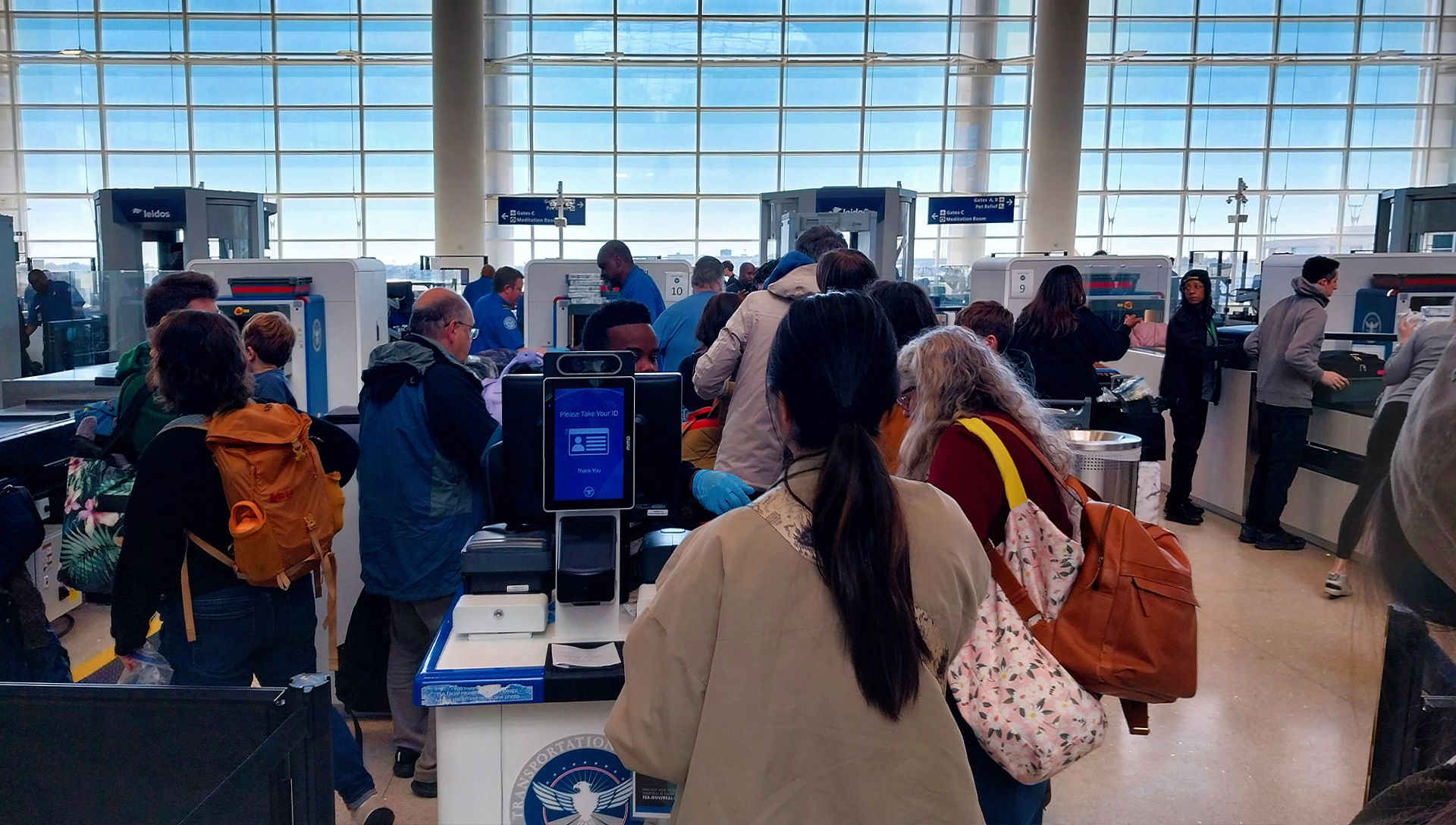
The airport is the most consistent answer. TSA reads mobile driver's licenses at more than 250 airports, from the wallets and apps it has approved for each state. AstreaX's guide to TSA digital ID acceptance walks through the checkpoint step by step.
Everywhere else, acceptance depends on who is doing the checking. California's DMV still tells mDL holders that many law enforcement agencies, government offices and businesses do not accept the digital version yet, so carry the physical card.
Online services and the statewide portal
The other place a digital identity earns its keep is the online account. Arizona's Motor Vehicle Division runs most of its routine transactions through AZMVDNow.gov, where more than 4 million residents have activated a free account to renew a registration, replace a license, transfer a title or book an office visit (ADOT, Dec. 18, 2023).
The state is extending that model across government. Atoz.az.gov/atoz a statewide, AI-native portal, organizes services around what residents and businesses need rather than around the agency that delivers them, and it authenticates on the AstreaX Identity platform, so one verified identity carries across the services a resident uses instead of a separate login for each. Arizona's chief information officer J.R. Sloan has described identity as the foundation of that portal (Government Technology, May 8, 2026).
That is the same pattern a state-issued wallet follows. One identity program behind the checkpoint, the online account and the app is what lets a resident prove who they are once and use it everywhere.
What this means for state agencies
Native wallets give residents a familiar way to carry the license and clear the checkpoint. A state-issued app gives the agency a channel it governs: which credentials it holds, which notices it sends, and which transactions residents can complete without a visit. Offering both works best when one state-controlled process handles identity proofing, issuance, renewal and revocation for every wallet, so a credential meets the same checks wherever it lives.
AstreaX's white paper sets out that model. Arizona Wallet shows it in production alongside Apple, Google and Samsung Wallet.
Sources
- AAMVA, Jurisdiction Data Maps: Mobile Driver License Implementation and Digital Trust Service Participation
- TSA, Participating States and Eligible Digital IDs
- TSA, TSA accepts myColorado mDLs during identity verification, August 31, 2026
- Apple, ID in Wallet: participating states
- Google Wallet Help, Add an ID to Google Wallet
- 9to5Google, Google Wallet for Android adds Oklahoma, October 5, 2026
- Samsung Wallet FAQ
- Office of Governor Gavin Newsom, California expands mobile driver's license to Samsung Wallet, April 28, 2026
- California DMV, CA DMV Wallet
- Colorado OIT, Colorado announces new myColorado mobile driver license, August 31, 2026
- LA Wallet
- NCDMV, North Carolina Mobile ID Program
- WRAL, NCDMV to launch new mobile ID program, August 2026
- Connecticut DMV, Connecticut Mobile ID arrives November 18
- ID Tech, Connecticut sets Nov. 18 launch for TSA-accepted Mobile ID app, October 29, 2026
- ADOT, Arizonans are first in nation to add driver licenses to Apple Wallet, March 2022
- ADOT, Arizona Wallet newest choice for digital documents, March 11, 2026
- ADOT, Arizona Wallet can now hold vehicle documents, May 18, 2026
- ADOT, 4 million accounts and growing: AZMVDNOW is safe, easy access to MVD services, December 18, 2023
- State of Arizona, my.az.gov
- Government Technology, State CIOs Push for a Unified Approach to Identity Verification, May 8, 2026